
From Tummy Time to the Playground: How Children Build Strength Through Movement

In my last blog, I spoke about how foundation skills develop before reading, writing, and maths. One of the most important foundation skills is movement. You can read my last blog here-----> Before Reading and Writing: The Skills Children Need First
Movement begins much earlier than we often realise—right from infancy.
Balancing Baby Gear and Floor Time for Growing Muscles
Baby gear like strollers, walkers, bouncers, and seats can look fun and helpful. They keep babies occupied and allow parents to get things done. They keep babies safe, entertained, and allow parents to manage daily tasks. These items have their place and can be useful when used thoughtfully.
However, when babies spend many hours each day in baby gear or walkers, their opportunities to move freely become limited. This often reduces the amount of time they spend on the floor—especially during tummy time: tummy time.

Tummy time is where babies begin to:
Build strength in their neck and shoulders
Activate their core muscles
Learn how to push against gravity
This is the starting point for all future movement.
How Strength Develops in Young Children
A child’s physical development follows a natural sequence.
From tummy time, babies begin to:

Strengthen their core, shoulders, and torso
Roll, crawl, and move their limbs with purpose
Pull themselves up and eventually stand and walk
Each stage prepares the body for the next one.
Studies have shown that infants who regularly use walkers often:
Sit, crawl, and walk later than those who do not
Score lower in early language and cognitive testing
This is because walkers reduce the time babies spend using their own muscles to move and explore.
Meet Lizzy

Lizzy is a preschooler now. She can run freely, climb confidently, and loves swinging and hanging during playtime.
But Lizzy didn’t start this way overnight.
As a baby, she spent plenty of time on her tummy. Slowly, she built strength in her neck, shoulders, and torso. As those muscles grew stronger, her arms and legs followed.
Even the small muscles in her fingers and toes were developing as she:
Gripped climbing equipment
Held on while swinging
Balanced her body during movement
Every part of her body worked together.
Movement Grows As Children Grow
As children get older, their world of movement expands.

Activities such as:
Trikes and balance bikes
Scooters and skateboards
Water play and swimming
Climbing frames and outdoor play can be introduced from early ages, with supervision.
Ball games are especially valuable. They help children develop:
Balance
Coordination
Strength
Body awareness

All of these support strong core muscles and good perception skills.
Why This Matters Later
Strong bodies support learning.
Children with good core strength and coordination find it easier to:
Sit comfortably in class
Focus for longer periods
Control their hands for writing
Move confidently and safely
Movement is not separate from learning—it is part of learning.
A Gentle Reminder for Parents
Before we worry about letters and numbers, it helps to ask:
Is my child getting enough time to move freely?
Do they spend time on the floor, climbing, crawling, and exploring?
When we support movement from the very beginning, we are supporting the whole child—body, mind, and confidence.
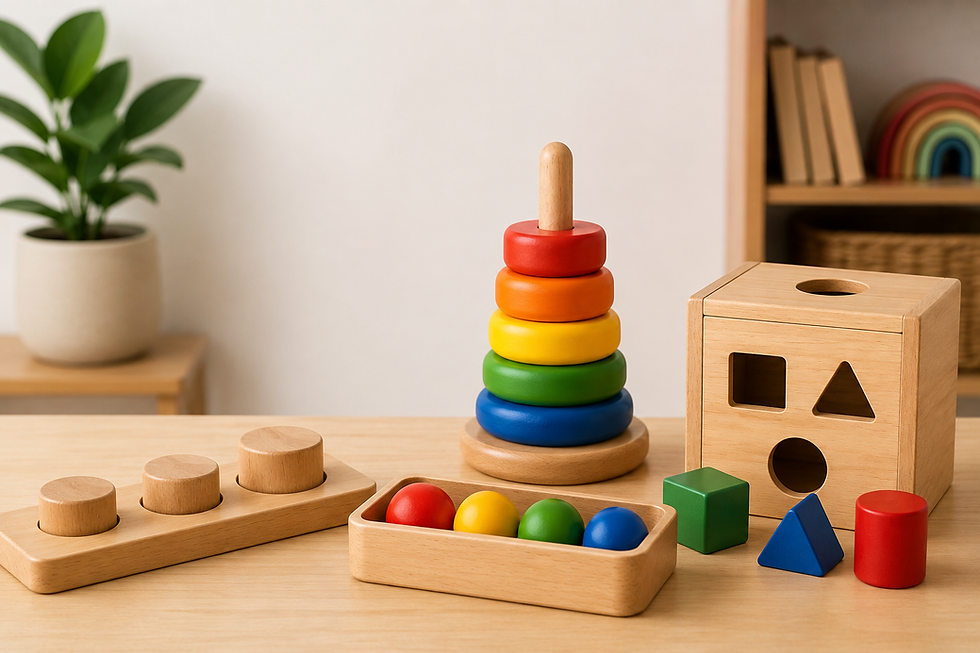
Our Montessori Wooden Stacking Rings help toddlers practice grasping, stacking, and problem-solving. The best part?
It’s available on Noon for easy order: Montessori Wooden Stacking Rings.


Comments